

Keep It Going Louder in conjunction with the Slam Zuckert Institute of Cultural Opinions Present…
The Best Non-Fiction Books of the 2010s
“If you disagree, fight me”
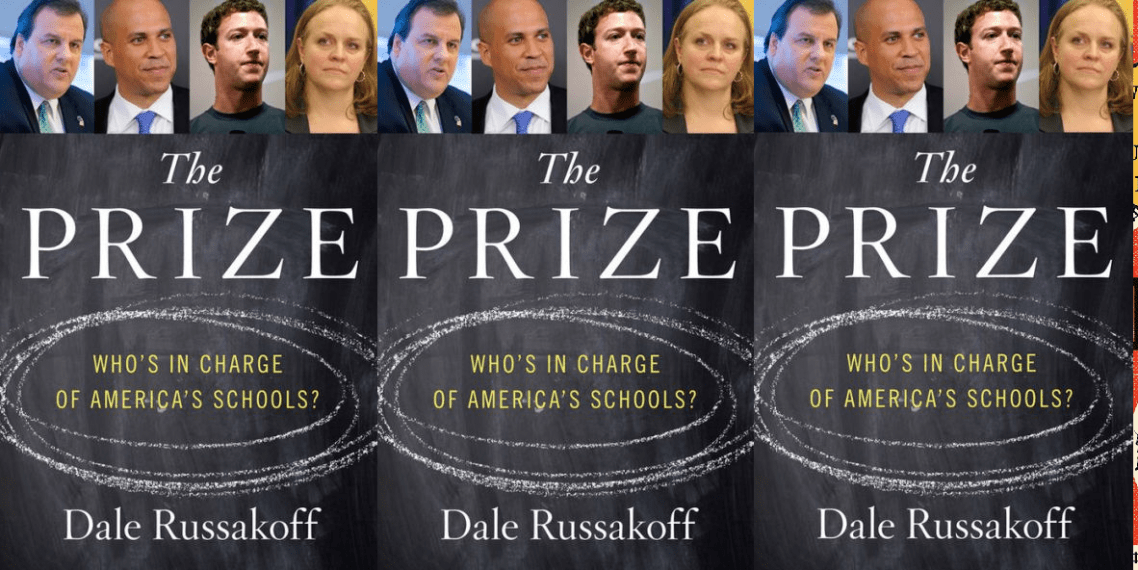
#25 – The Prize : Who’s in Charge of America’s Schools?
by Dale Russakoff
One thing I would think every education advocate would agree on is that we should not let adult politics get in the way of providing our children with the best possible education. However it seems that a whole bunch of people disagree about how to not let adult politics get in the way and thus we have all of our fun political stalemates about public education.
In 2010, Mark Zuckerberg’s announcement of a $100 million donation to Newark Public Schools was supposed to be a bold step forward in public-private partnership and with the help of Newark Mayor Cory Booker and New Jersey Governor Chris Christie as partners was going to start a new era of bipartisan education reform. In The Prize, Russakoff documents how it all fell apart.
Told with a level head and an unbiased eye, Russakoff’s only agenda is to show the maddeningly complex world of public education reform and how even a group of like-minded interest groups who all genuinely want real education reform can fail when their incentives don’t align. Money was squandered on frivolously consultants, teachers unions and charter advocates couldn’t resolve their mutual suspicions, and politicians used the money and attention for their own political interests instead of the improvement of the schools (Booker ditched Newark to run for US Senate in 2013, Christy ran for president in 2016). As informative as it is infuriating Russakoff provides an eye opening account of how one city swung for the fences and whiffed with all its might. We would be wise to use Russakoff’s account to learn from past mistakes made in the Sisyphean task of lifting the interest of the public above the financial and political squabbles of those with their hands on the reins.
Unofficial Theme Song: “C.R.E.A.M.” by Wu-Tang Clan
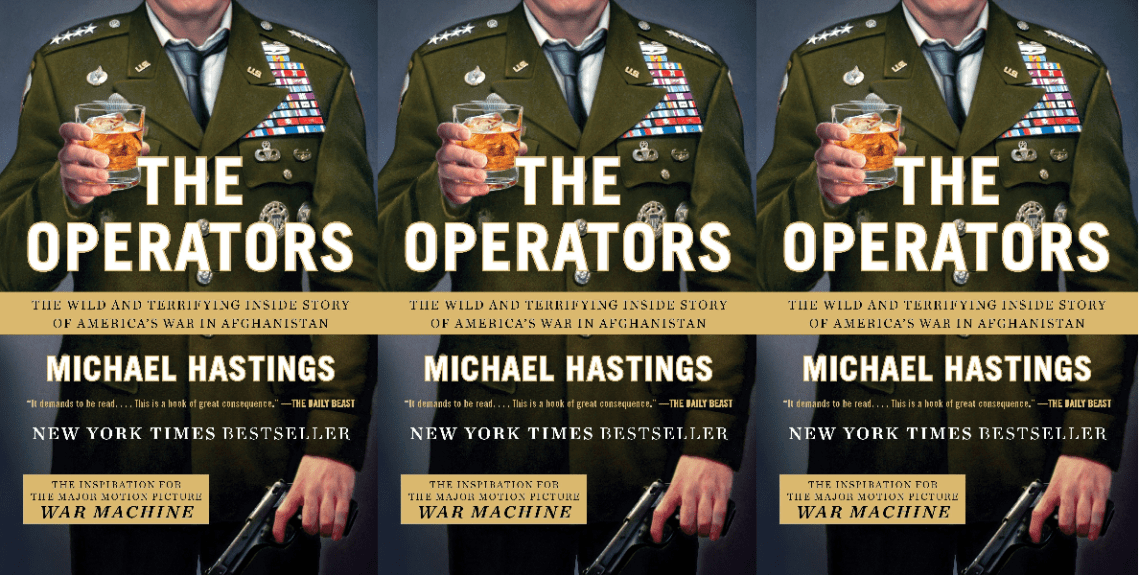
#24 – The Operators: The Wild and Terrifying Inside Story of America’s War in Afghanistan
by Michael Hastings
War is not what it once was. No longer the glamorous clash of two noble battalions, modern war is often a violent slog of counterinsurgency with more focus on logistics than battle. And this is even when the war has clear goals and objectives. So we have this War in Afghanistan, a war that’s now old enough to vote, launched on dubious pretenses without any semblance of a cohesive plan of action, and still has no end in sight.
The Operators is essentially an expansion of an article Hastings published in Rolling Stone in 2010 about General Stanley McChrystal which was so juicy that Obama recalled him to DC where he was essentially forced to resign. Hastings traveled with McChrystal and his team in Afghanistan and he paints a portrait of a war machine in disrepair. Sure you can have the smartest generals and the best prepared soldiers and the most advanced technology…but what good does it do when you’re fighting a war that’s functionally aimless? A startling look into the longest war in US history at a time when there was still hope to turn it around and win a conclusion (spoiler: we didn’t and haven’t).
Unofficial Theme Song: “B.Y.O.B.” by System of a Down
#23 – The Emperor of All Maladies: A Biography of Cancer
by Siddhartha Mukherjee
A fascinating biography in name and spirit, The Emperor of All Maladies tells the story of the life of Cancer through both the biological life of the cancerous cells and the human history of cancer identification and treatment. Starting with the first cancer diagnosis by Imhotep, the legendary Egyptian physician, 4,600 years ago, Mukherjee chronicles human efforts to combat the wiley and diverse disease. Treatment methods for cancer have been historically brutal on the bodies of those being treated (see: the radical mastectomy) but doctors and scientists have since developed more effective and less devastating treatment methods that have turned cancer diagnoses from an almost certain death sentence to a disease we have a fighting chance against.
Mukherjee does an excellent job making the science and technical details lucid and easy to understand while weaving together historical narratives and his own personal experience as a Hematology/Oncology fellow at Massachusetts General Hospital. The Emperor of All Maladies is an excellent read for anyone interested in the history of Cancer and Cancer treatment, unveiling the cloud of mystery that hangs over one of the scariest diagnoses a person can get. Mukherjee has said that he was inspired to write the book after a patient of his wanted to know exactly what she was up against. She said, “I’m willing to go on fighting, but I need to know what it is that I’m battling.” Mukherjee has put together an important book that masterfully lays out what we’re fighting when we’re fighting Cancer.
Unofficial Theme Song: “Counting” by Autre Ne Veut

#22 – Final Solution: The Fate of the Jews 1933-1949
by David Cesarani
There’s a reason that Nazis and Hitler are the subject of Godwin’s law as opposed to other historical figures and atrocities. The Holocaust is viewed as an epitome of human evil, and rightly so, however the actual motivations and mechanics of it are often glosses over, assumed to be wholly genocide from the beginning and operated by a swath of evil and genocidal men. In painstaking detail Cesarani offers a new theory to the motivations of the Holocaust, not denying the evils of Hitler and the Nazis but offering a more nuanced look at how it actually took place as it evolved once the Nazi’s took power.
Cesarani roots his theory in the context of Nazi Germany’s territorial ambition and war efforts, his main claim being that at first while Nazi Germany was successful in their territorial and wartime ambitions, the policy was to violently expel the Jews and remove them from the Reich. His research shows that only once their military success began to dwindle and it became clear they would not conquer the Soviet Union did the focus turn to the total annihilation of the Jews.
A brutal but important read, Cesarani provides a meticulous review of Nazi policy and practice and the devastation it caused on the Jews and Europe as a whole. Cesarani refuses to be anything less than totally comprehensive and it shows in the 1000 pages he fills. Final Solution is an important read for anyone who wants a deeper understanding on the mechanics of the Holocaust and how ideological threats can quickly turn to genocidal violence when a nation enters a crisis and refuses to reflect on their own responsibility.
Unofficial Theme Song: The Mourner’s Kaddish
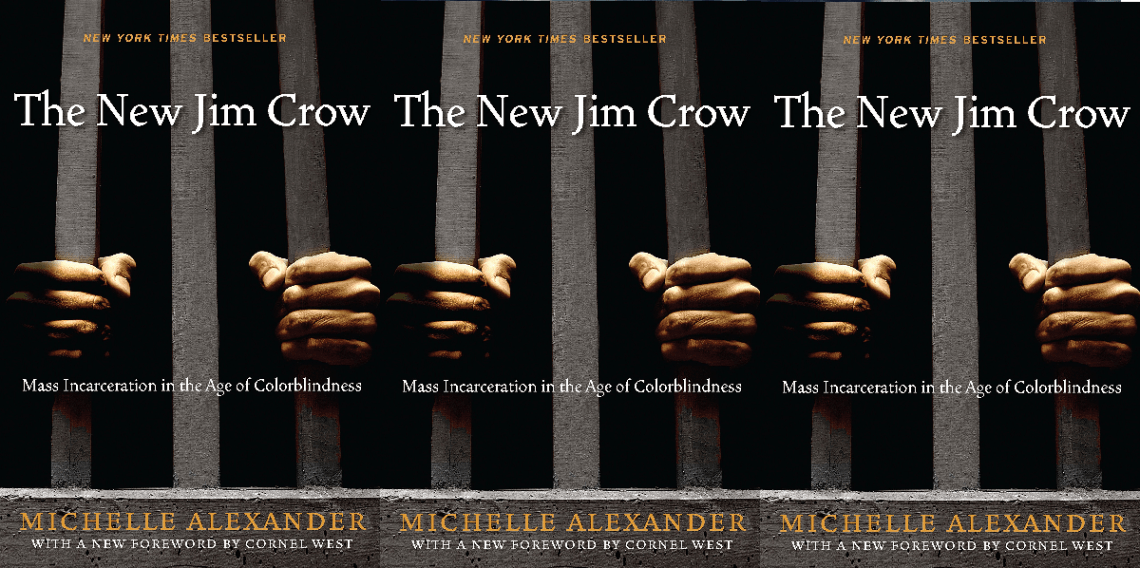
#21 – The New Jim Crow: Mass Incarceration in the Age of Colorblindness
by Michelle Alexander
If we as a country are ever able to crawl out from under the rubble of mass incarceration, we will likely look back at The New Jim Crow as the first bulldozer to the scene. In it Alexander makes a forceful case that the war on drugs and aggressively punitive tough-on-crime prison sentences are another effort by the US government to oppress our black citizens and that case has since jumped from the pages to the halls of Congress.
While the direct analogy to Jim Crow may not perfectly align in all aspects (Alexander focuses more on the war on drugs than violent crime and downplays any support from within the black community at the time for tough-on-crime policies (see: Locking Up Our Own by James Forman Jr.)), The New Jim Crow is a striking and important look at the US criminal justice system and its disparate impact. You can argue about the mindset of those advocating and enacting for increased punishment but there can be no arguing (well, there should be no arguing…those in favor of institutional racism or immune to facts will likely still argue) about the devastating racist impact of these policies and their enforcement on black communities, especially with regards to the war on drugs. The New Jim Crow is a call to arms to dismantle the US prison system as we know it and end the war on drugs; the fact that has since been joined by and abundance of other books on the cruelty and racism endemic to the US prison system (and hell, even Republican legislators and the Koch brothers are advocating for reducing prison sentences) is a testament to the power of Alexander’s scholarship.
Unofficial Theme Song: “New Slaves” by Kanye West
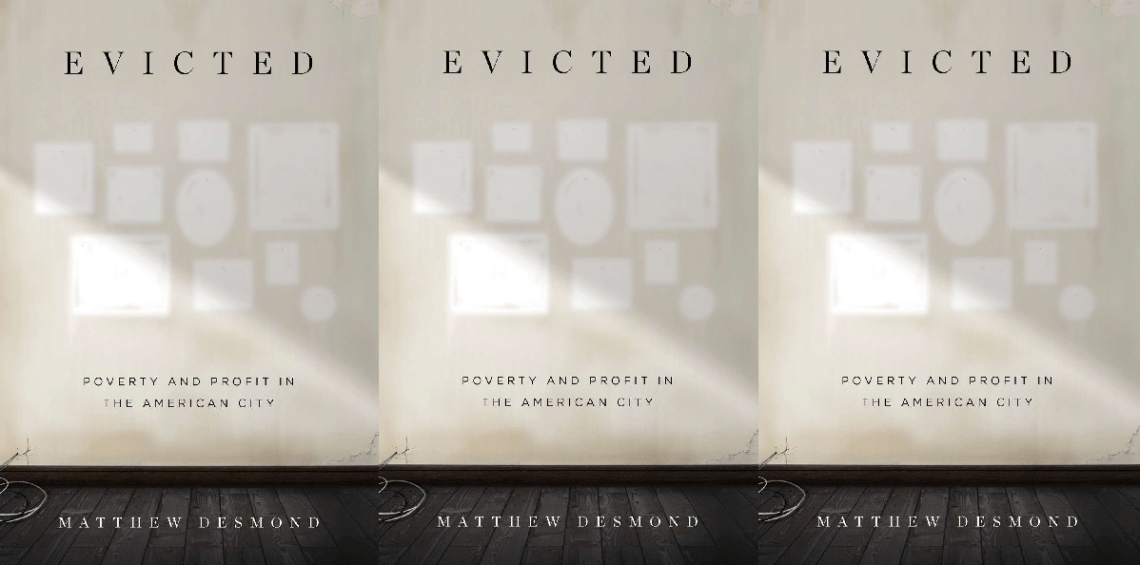
#20 – Evicted: Poverty and Profit in the American City
by Matthew Desmond
A hidden scourge on the most disadvantaged members of our communities, evictions take a sledgehammer to a family’s sense of stability and in post-Great Recession America can be as much of a cause of poverty as it is a result. Desmond provides a powerful book about the cruel realities of evictions and the powers that landlords can wield over their tenants; he follows eight families in Milwaukee, Wisconsin as they struggle financially, try to maintain a sense of normalcy for their families, and ultimately face eviction.
Combining compelling personal narratives with rigorous research Desmond lays bare the structural deficiencies that allow for housing issues and evictions to further entrench families in poverty and how a single eviction can cause damage that lasts generations. Financial exploitation, lack of affordable housing, and government economic policy that encourages the transfer of wealth from the poor to the very rich are all culprits for the housing crisis in America but often lost are the stories of the actual people who suffer. Desmond puts a face to their struggles, the families he follows do not make perfect decisions and they are not always blameless with regards to their eviction, but Desmond shows how our government fails to mitigate the impact of their poverty and often times makes their situations worse, not better. Property owners are often cast as the malicious forces in these disputes but Desmond does not paint them all as evil slumlords and shows how some are dealing with their own financial troubles and oftentimes have to make the brutal decision weather to put a family out on the street or risk their own financial livelihood.
An important testament to the failures of US government housing policy, especially in the wake of the 2008 housing crisis, Evicted offers an in-depth picture of US housing policy and the human suffering it can inflict on those whose housing woes put their lives into an economic death spiral.
Unofficial Theme Song: “Dead Landlord” by Bob Dylan

#19 – Rise and Kill First: The Secret History of Israel’s Targeted Assassinations
by Ronen Bergman
Your view on the assassinations covered in Rise and Kill First will be heavily colored by your views of Israel as a nation. If you have strong Zionist inclinations, Rise and Kill First will read like an action thriller that chronicles Israel flexing its muscles to stop those who work towards it’s destruction. If you lean more towards the view that Israel is an imperialist colonial state then it will read as more evidence to the dastardly lengths Israel will go to silence its critics and maintain its settler colonialism.
Though people can disagree on the morality of assassinations in general and in these specific cases, Bergman presents them in a miraculously detailed fashion, giving us the facts and context and letting the reader make their own judgements to their merit. As with any history of covert state action, Bergman had to fight against the powers that wish to keep these killings secret for this book to see the light of day. He reportedly conducted around a thousand interviews with political figures and secret agents and consulted thousands of documents, many of them newly and begrudgingly declassified by the state of Israel. Israeli secret services even tried to disrupt his research, asking Mossad employees to not give interviews with him and even holding a meeting in 2010 prevent him from researching the assassinations.
Through all that Bergman managed the herculean task of documenting the planning and implementation of targeted killings of British officials, Iranian nuclear scientists, and leaders of Hamas, Hezbollah and the Palestine Liberation Organization. A fascinating history of one countries covert efforts, the complexity and sheer audacity of many of the plans feel like you’re reading excerpts from a geo-political Mission Impossible. All in all a powerful window into the efforts of Israel to stop those who are viewed as threats to the nation and population’s safety.
Unofficial Theme Song: “Killing in the Name Of” by Rage Against the Machine

#18 – Black Against Empire: The History and Politics of the Black Panther Party
by Joshua Bloom and Waldo Martin
The Black Panther Party (BPP) has loomed large in the imaginations of both those who fight racism in America and those who fear an America that is forced to reckon with its racist past. A polarizing group to say the least, the picture more people keep of the BPP is rooted more in mythos than history; Bloom and Martin look to put an end to that with Black Against Empire, their comprehensive history and political analysis of the Black Panther Party.
Black Against Empire tells the story of the meteoric rise and abrupt fall of the Black Panther Party, founded in 1966, ubiquitous by the end of the 1960s, and functionally dissolved in the US by the mid-1970s. They take us through all the highs and lows, cop-watching that lead to firefights with the police, development of their Free Breakfast for Children Programs and community health clinics, connection to pan-Africanism and anti-imperialist revolutionaries, and of course the FBI and US Government efforts to stop their political goals and organizing efforts.
However you feel about the Black Panther’s tactics, Bloom and Martin show how the FBI’s fear of Black American’s organizational efforts lead to abuses of power and the use of government force to stop citizens from exercising their constitutional and political rights. The FBI’s COINTELPRO operation frequently used infiltration, perjury, and police harassment to undermine BPP leadership and their war against the BPP reached a horrific zenith when they assassinated Fred Hampton and Mark Clark in December of 1969.
Bloom and Martin do an excellent job putting the BPP’s politics and actions in the context of historical period in which they were born. Though controversial at the time their ideas proved to be ahead of their time and even their most staunch detractors must acknowledge the US Government and FBI’s abuse of power. BPP were a truly revolutionary organization that have left a permanent impact on racial politics in this country, this level-headed and comprehensive history is an essential read for anyone who wants a deeper understanding of the Black Panther Party and how it paved the way for modern anti-racist activism in the US.
Unofficial Theme Song: “Fight the Power” by Public Enemy
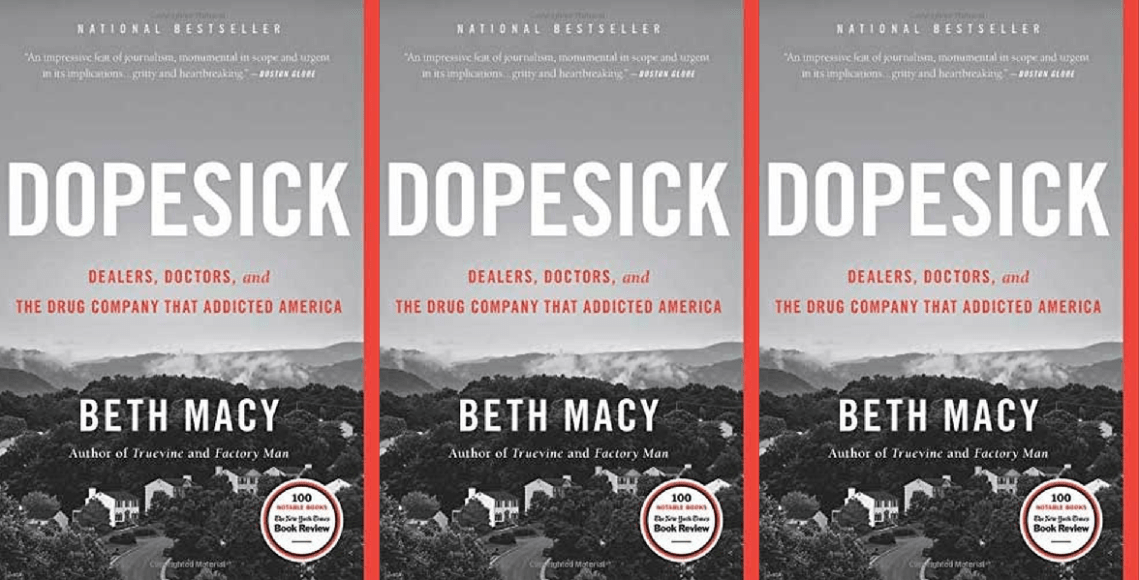
#17 – Dopesick: Dealers, Doctors, and the Drug Company that Addicted America
by Beth Macy
As the opioid epidemic continues to devastate American families and cities it behooves us to take a deeper look at how we got to where we are and no book this decade does a better job than Macy’s Dopesick. No stranger to the parts of America that have become all-too-routine to ignore, Macy uses all the knowledge she’s build up reporting on Central Appalachia for the past decades to give us an intimate view of the opioid epidemic’s disastrous impact on families and communities alike. Centered on Purdue Pharma’s greedy and overzealous marketing of the drug OxyContin, she shows how the company’s focus on profit devastated local communities and how doctors, drug dealers, and those addicted to opioids all became caught in the tangled web of human suffering.
Macy also covers the crisis in treatment we face, highlighting how little treatment is based on scientific research and how often the only treatment option people can afford are ones that are built on ideology instead of clinical best practices.. Thankfully our nation is taking a more empathetic route towards drug addiction these days and journalists like Macy should get a lot of credit for pushing forward this charge, Dopesick is a stark reminder of the suffering caused by drugs and those who seek to profit from them, especially in the areas of our country least likely to have the resources to help.
Unofficial Theme Song: “Dopeman” by Vince Staples featuring Joey Fatts & Kilo Kish
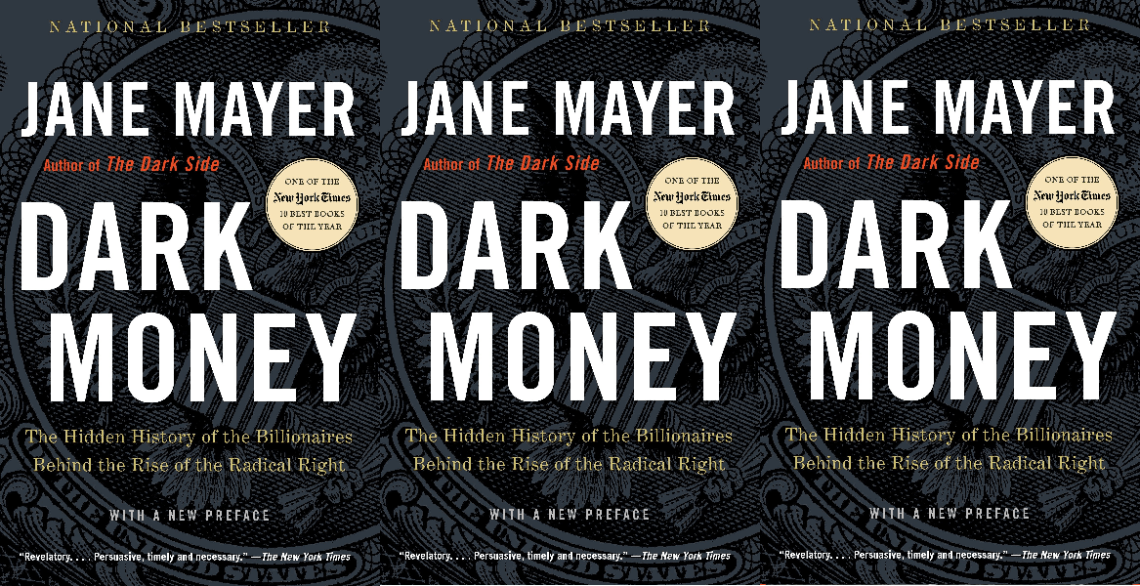
#16 – Dark Money: The Hidden History of the Billionaires Behind the Rise of the Radical Right
by Jane Mayer
There is nothing natural about the level of income inequality in America today. Our economic system is determined by the policies we adopt and as Mayer so carefully lays out in Dark Money, these policies are not the result of a popular desire for deregulation and low taxation for the rich but rather a concentrated effort by some of the wealthiest individuals in America to rig the system in their favor and hoard as much wealth as possible.
Mayers show how modern day Robber Baron families like the Mellon-Scaife, Olin, DeVos, Coors, and Koch families have molded the Republican party to be subservient to the needs of the wealthy at the expense of the vast majority of the US population. Donations to universities, think tanks, and technically “non-political” nonprofits lay the intellectual groundwork while billionaire-funded PAC money would line the pockets of the campaigns of politicians who will do their bidding.
Surprise surprise, the laws they enact are heavily influenced by the billionaires who helped them get elected and sometimes they’re even explicitly written by them through groups like the American Legislative Exchange Council (ALEC).
As the US descends towards oligarchy, Mayer presents the mechanics of the takeover in excruciating detail. There have always been conspiracy theories as to who really controls the government, and sometimes it feels safer to blame an abstract internet-hoax, but the reality is that money is power and those with a disproportionate amount of it who choose to wield their power to enrich themselves at the expense of others have an outsized impact on the policies enacted by the US Federal and State-level governments. There is certainly a conspiracy afoot but it’s right in front of our faces and Mayer offers a textbook of proof as to who, how, where, and why our democracy has been subverted in the interest of the few at the expense of the many.
Unofficial theme song: “Laughin’ To The Bank” by Chief Keef

#15 – Texas Tough: The Rise of America’s Prison Empire
by Robert Perkinson
One of the great ironies of the Prison Industrial Complex in the US is that early prisons were hailed as a progressive step forward in criminal justice. Prisons in the North-East United States implemented the Pennsylvania and Auburn systems which in their combination of manual labor and solitary confinement were believed to have a positive therapeutic effect on inmates and better prepare them for life after prison. However, as Perkinson shows in his methodical research, once the prison movement started the antebellum North and post-civil war Texas quickly diverged quite dramatically.
In his comprehensive review of the history of Texas’s state prison system, Perkinson shows how the prisons developed in Texas as pure methods of punishment and as a tool to suppress and re-enslave the black population. He also provides a thoughtful analysis of the impact our prison systems have had on criminal justice attitudes today, Perkinson draws a straight line from slavery to the use of prisons in our current criminal justice system that continue to this day. The prisons were designed to re-enslave the black population, often convicting black citizens of crimes they didn’t commit and then sentencing them to obscenely length sentences for no other reason that cruelty and malice.
Though Perkinson never explicitly calls for the abolition of the prison system in Texas Tough, his meticulous research of the designed inhumanity of the Texas and US prison system strongly suggest that if we can’t make significant changes soon the only moral action to take might be to tear it all down and start from scratch.
Unofficial theme song: “Blame It On Texas” by Mark Chesnutt
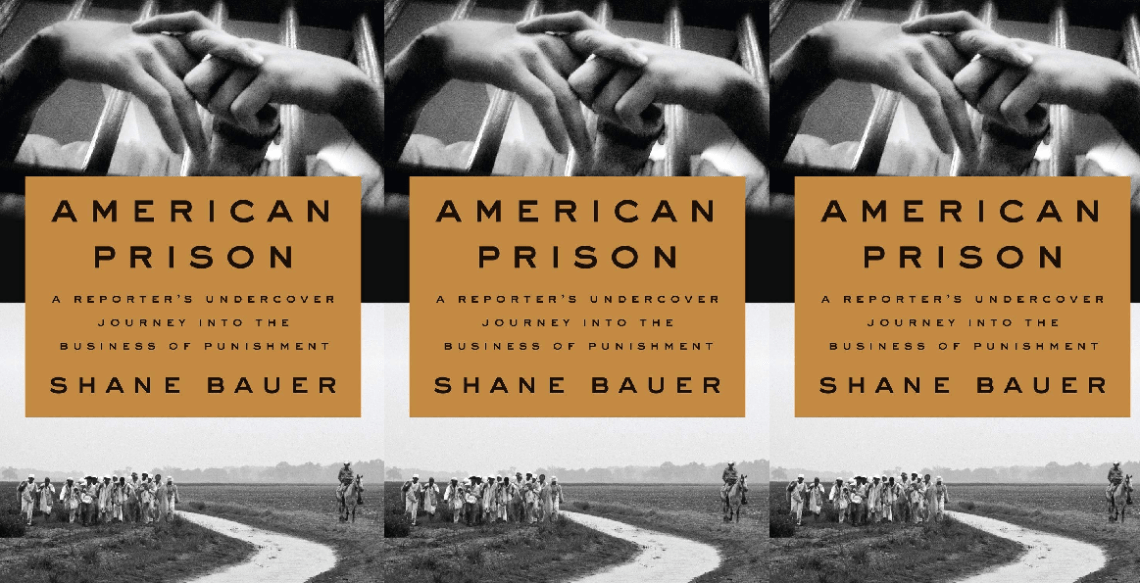
#14 – American Prison: A Reporter’s Undercover Journey into the Business of Punishment
by Shane Bauer
The 13th Amendment to the US Constitution states that “Neither slavery nor involuntary servitude, except as a punishment for crime whereof the party shall have been duly convicted, shall exist within the United States, or any place subject to their jurisdiction.” Private prison owners have taken full advantage of the “except as a punishment for crime whereof the party shall have been duly convicted” clause and currently profit from not only the imprisonment of others but often their slave labor as well.
Naturally they are secretive as they don’t want the general public to see how despicably they treat people sentenced to their prisons, but Bauer outsmarted them by…applying for a job as a guard at the Winn Correctional Center in LA, getting hired (they likely didn’t do any sort of background check, a simple google search would have revealed he was a journalist who had previously been kidnapped by Iran while in Iraq and held in an Iranian prison on false charges for over two years), sneaking a recording device into the prison when he worked, and then writing about what he saw and experienced.
This insider look at private prisons is an invaluable addition to the public knowledge of how our tax dollars are spent. Bauer documents not only the poor prison conditions but also the toll that being a guard takes and how the prison system is designed to be dangerous and hurt inmates rather than help them. Living in the area he also witnesses how the guards, who often politically support the private prison industry, are also exploited by the prison; the mental toll that oppressing others thy share is reminiscent of Fanon’s analysis of French colonial police in Algeria.
As a society we have to ask ourselves whether we believe in treating those convicted of committing crimes with the human dignity that we would want for ourselves. Bauer’s insider look at private prisons makes a strong case that when profit is involved the best interest of the inmates and the guards will not be looked after, the only thing those who run the prison will be looking for is how to squeeze every ounce of profit out of their business and line their own pockets with taxpayer dollars. If we don’t advocate, vote, and fight for a more righteous justice system our nation will continue to ship people convicted of crimes back to the Jim Crow South and keep them out of sight and out of mind for all too many Americans.
Unofficial theme song: “Locked Up”by Akon featuring Styles P

#13 – The Undoing Project: A Friendship That Changed Our Minds
by Michael Lewis
There are many great American non-fiction writers; some do excellent, deep research to investigate the powerful, some are groundbreaking in their styles and prose. Michael Lewis can tell a damn story. In The Undoing Project he focuses on the rise and fall of the personal and academic partnership between Israeli psychologists Daniel Kahneman and Amos Tversky, a partnership whose groundbreaking work in judgment heuristics and decision-making upended conventional psychological models and resulted in a Nobel Prize in Economics.
Lewis explores their work in his classic digestible and informative style, following their personal relationships and the highs and lows that can follow professional and personal success. Lewis explores Kahneman and Tversky’s personal histories, both were born in pre-Israel Mandatory Palestine and were heavily influenced by the tumultuous early years of Israel’s existence. As Lewis weaves their research and results into a story about partnership, the human psyche, and market inefficiencies (it is Michael Lewis after all) we get a deeper sense of how attempting to fight against a paradigm can impact a person, even if they are successful.
If you’re only interested in the research then obviously Kahneman and Tversky’s seminal Thinking, Fast and Slow will be more up your alley but Lewis does a superb job distilling their research and adding in layers of context about the men themselves and their touching story of collaboration. Someone get Michael Lewis a medal that man is a national treasure.
Unofficial Theme Song: “My Partner Dem” Young Dro, Yung LA & Rich Kidz

#12 – The Skies Belong to Us: Love and Terror in the Golden Age of Hijacking
by Brendan I. Koerner
Were you aware that from May 1961 through January 1973 a plane was hijacked in the US on average once every month? I was not. Then I read The Skies Belong to Us and now I am a better man for it. For those of us who grew up in a post-9/11 America it’s hard to imagine airport security being anything less than invasive and hijackings as being anything less than catastrophic, but for one bizarre decade airport security was lax, politics were potent, and hijackings were everywhere.
Koerner takes a look at the trend through an epidemiologist’s lens, investigating the origin of the hijacking outbreak, what caused it to propagate, and finally how it was ended. Throughout we follow the insane story of the hijacking of Western Airlines Flight 701, the farthest in American history. On that flight Willie Roger Holder and Catherine Marie Kerkow hijacked an LA to Seattle flight with a fake bomb in a briefcase and took it to San Francisco, New York, and finally Algeria where they were granted political asylum and taken in by the Algeria Black Panther Party. The Skies Belong to Us tell the story in ludicrous detail while placing it smack dab in the middle of a forgotten epidemic that tested the relationship between government, business, and a nation.
Unofficial Theme Song: “Planes (Remix)” by Jeremih featuring Chance The Rapper
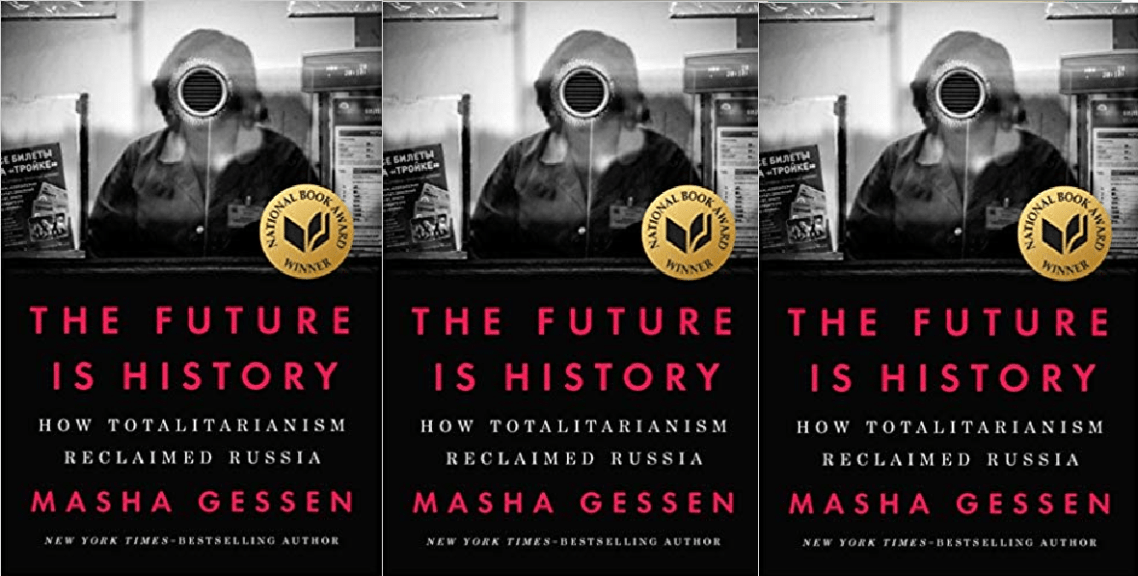
#11 – The Future is History: How Totalitarianism Reclaimed Russia
by Masha Gessen
In 1991, Boris Yeltsin was democratically elected to be the first president of Russia and the excitement of freedom was in the air. Six years later Yeltsin named Vladamir Putin, a little know Saint Petersburg administrator and former KGB agent, to be his Deputy Chief of Presidential Staff. In the next presidential election Putin won with 53.4% of the vote and has effectively ruled over Russia since.
In short, that is the story. Gessen does a tremendous job gathering the who, what, where, when, and why of Russia’s brief experiment with democracy and how the powers that be were able to quickly grab the economic and political levers of power that were left unguarded by the fall of the Soviet Union and use them to turn a new democracy into a mafia-state oligarchy. An essential read for anyone who wants a deeper understanding of the current state of Russia and Putin’s grasp on power, Gessen is a forceful voice for truth and justice and her work is critical to the geo-political future of US, Russia, and the world.
Unofficial Theme Song: ”Back in the USSR” by The Beatles
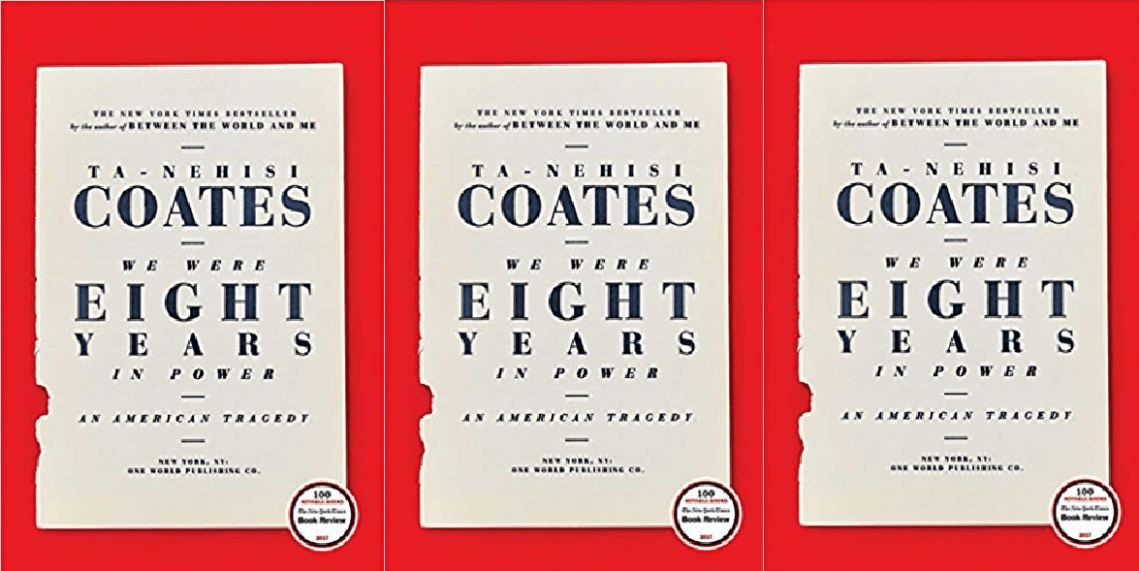
#10 – We Were Eight Years in Power: An American Tragedy
by Ta-Nehisi Coates
Coates launched himself into the ranks of American preeminent public intellectuals in 2015 with his Between the World and Me; it is a beautiful and moving Fire Next Time-style collision of the personal and the political but for my money’s worth We Were Eight Years in Power is a wider and more encompassing display of Coates’s fierce intellect and sharp eye for dissecting America in the Obama years.
A collection of eight essays from Coates’s years at The Atlantic, one for each year of the Obama era, We Were Eight Years in Power is a window into Coates’s views and mindset across those fleeting eight years. The essays themselves are powerful and informative including “The Case for Reparations” and “The Black Family in the Age of Mass Incarceration” and the movement of his thought and his constant reflection give the book an incredible sense of gradual evolution and reflection not unlike Richard Linklater’s monumental Boyhood. Published in October 2017, looking back from Trump’s America to Obama’s, Coates essays are as pertinent as every and his reflections offer valuable insight to how the state of the country impacts one of its foremost thinkers.
Unofficial Theme Song: “My President” by Young Jeezy featuring Nas
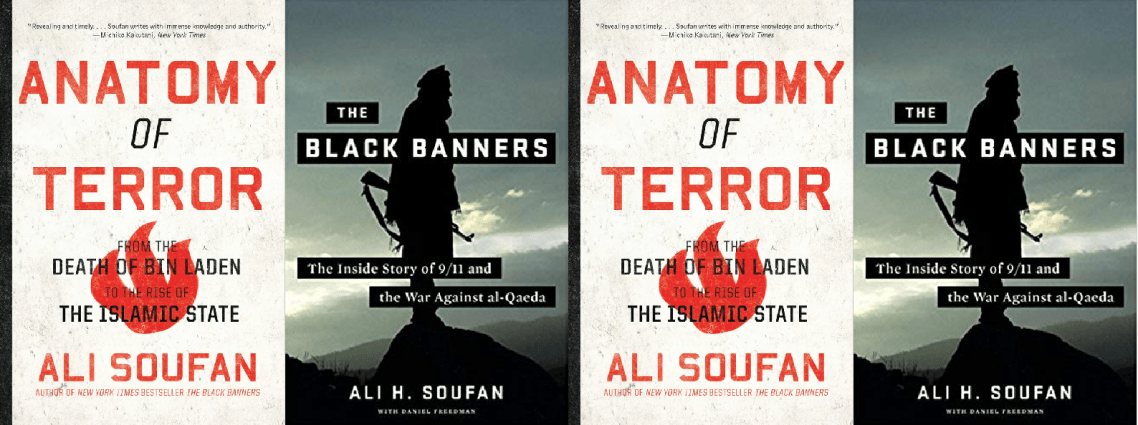
#9 – Anatomy of Terror: From the Death of Bin Laden to the Rise of the Islamic State & The Black Banners: The Inside Story of 9/11 and the War Against al-Qaeda
by Ali Soufan
Before leaving the FBI due to growing frustration over inter-agency tensions, Ali Soufan was almost certainly America’s leading expert on Wahhabi Extremist Terrorist groups. He was the lead investigator of the USS Cole bombing, at the time of 9/11 the only FBI agent in New York who spoke Arabic (and one of only eight in total), and there’s a common sentiment that he was the closest person to preventing the actual 9/11 attacks.
With that in mind, after Soufan left the FBI he wrote two books on the history of al-Qaeda, the Islamic State, and Wahhabi Terrorist groups and they are incredible reads for anyone who wants to learn about the roots, mechanics, and politics of terrorist group in the Middle East and beyond. Both Anatomy of Terror and The Black Banners are valuable resources to understand the motivations of terrorist groups, how US policy can harm or help them, and what the fight against them looks from the ground up. Mixed in are Soufan’s accounts of his time in the FBI which are as fascinating as his work on the terrorist groups he was fighting. We get a mix of classic FBI crime-fighting intrigue he does while trying to avoid all the modern bureaucratic and inter-agency roadblocks in his way. Plus, the FBI and CIA went way out of their way to excessively redacted parts of the book (in one instance they insisted he redact a quote from a senator that was said on a televised public hearing…) so you know he’s giving us the good stuff.
Soufan treats us like an old friend who is telling us about his time in FBI and his views on US policy and few people have more interesting stories to tell about their role in America’s global fight against terrorism.
Unofficial Theme Song: “Most Wanted” by Cults

#8 – Blood in the Water: The Attica Prison Uprising of 1971 and Its Legacy
by Heather Ann Thompson
The difference between a prison riot and a prison uprising is usually in the eye of the beholder. Sparked by a relatively mundane schedule miscommunication, the Attica Prison Uprising of 1971 became a touchstone for the prisoners rights movement and although the uprising was at least partially successful (New York took steps to improve their prison system based off the prisoners demands) the human and political cost was huge.
Thompson spends the first part of the book focusing on the uprising itself, providing a riveting, almost hour-by-hour account of the four days that the prisoners had control of Attica. The human cost of the uprising is brutal, 43 men were killed (33 prisoners and 10 Attica staff), 5 at the hands of the prisoners and 38 by state police that Governor Nelson Rockefeller sent it to retake the prisons. After the state police took the prison back they proceeded to beat and torture the inmates involved in a much more sadistic fashion than anything the prisoners did while in control, leaving many men with permanent mental and physical wounds.
Thompson does an excellent job presenting a comprehensive review of the uprising itself however the most important and original aspect of Blood in the Water is its contribution to our understanding is the aftermath, focusing on both the political and legal ramifications. Thompson’s research into the legal aftermath was hard fought, the state of New York very much did not want her digging into the archives of the investigations and her afterward about her research journey is almost as interesting as the subject itself. The legal process that followed was contentious and drawn out, the prisoners fought tooth and nail to file a class action lawsuit for the death and abuse caused by the state and the families of the Attica staff who were killed at first did not see common cause with the prisoners even though both groups were essentially fighting the same fight. Thompson makes a strong case that the uprising itself was justified however following the political fallout she also notes how it may have been a long term tactical disaster, the uprising took place in 1971, mid-Nixon and before Reagan was a national political force. The general (white) public did not react kindly towards the prison uprisings and the loud conservative and racially coded reactions likely were a potent force in predisposing people to support the growth of the war on drugs and mass incarceration.
Unofficial Theme Song: “Fuck tha Police” by N.W.A.
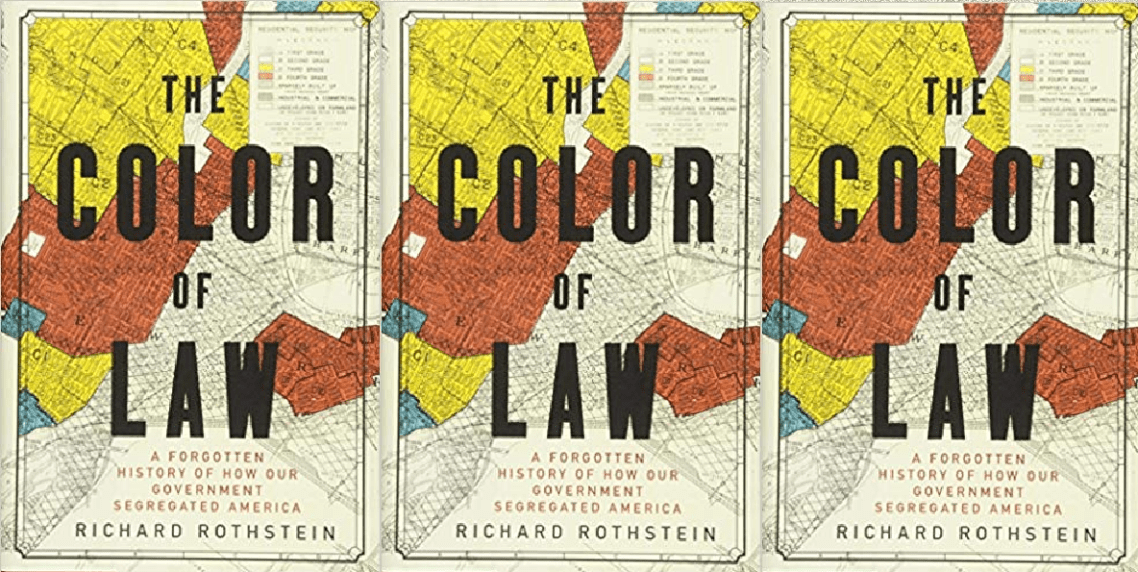
#7 – The Color of Law: A Forgotten History of How Our Government Segregated America
by Richard Rothstein
There’s a persistent myth that housing segregation in the US was mostly a result of personal choice and discreet unethical actors, that the main driver was private individuals and not the state or federal government. By laying out exactly how the Federal Government not only allowed but encouraged racially segregated housing in America The Color of Law shatters the myth of de facto segregation and should put to bed once and for all the idea that the government was not responsible for residential segregation. Like a convex lens focusing light onto one point, The Color of Law focuses US government housing policy and focuses us on the conclusion that since we the people and our representative government are at fault for segregating America, so should we be responsible for repairing the damage it has caused.
Rothstein demonstrates how the US government and our courts created and upheld racist housing policies meant to segregate black and white Americans; from the lackluster implementation of the Fair Housing Act to the redlining done by federal housing insurance policies, the US government has been complicit in the segregation of America and massive loss wealth it has caused to black Americans. Through detailed research and powerful narratives The Color of Law makes a strong case that desegregating housing in America is not only a laudable goal but a national responsibility.
Unofficial Theme Song: “Can I Live” by J. Cole
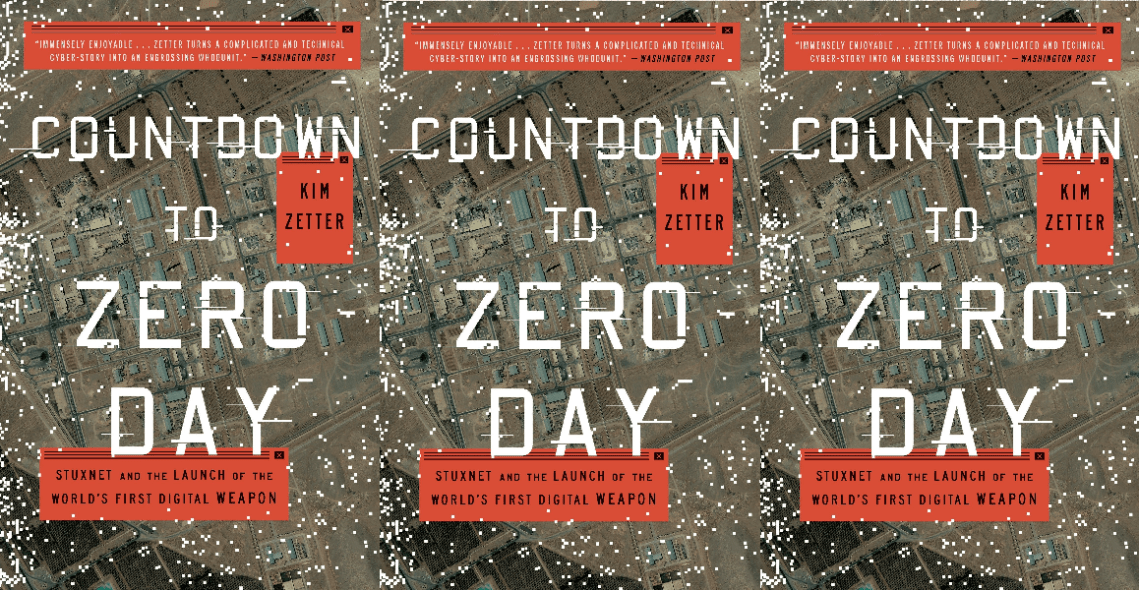
#6 – Countdown to Zero Day: Stuxnet and the Launch of the World’s First Digital Weapon
by Kim Zetter
Welcome to the age of cyber-warfare y’all. In 2010 centrifuges at an Iranian uranium enrichment plant starting not just failing but seemingly self-destructing at a confusingly high rate. The cause was a complete mystery at the time to both the International Atomic Energy Agency inspectors and the Iranian Nuclear scientists. Then, months later, a computer security firm in Belarus was inspecting Iranian computers that had nothing to do with their nuclear program and noticed that what at first looked like standard malware but as they dug deeper into the malware they realized they had stumbled upon the world’s first known cyber-weapon, Stuxnet.
In the pages of Countdown to Zero Day Zetter takes us deep into the world of computer security and cyber-warfare, distinct from cyber-espionage in that cyber-espionage seeks to steal or acquire information and intelligence whereas cyber-warfare seeks to inflict physical damage on it’s subject. We travel around the world learning the history of cyber-warfare and go deep into the story of Stuxnet’s creation, implementation, and discovery. As we enter a new age of digital warfare, Countdown to Zero Day is a brilliant look at the Stuxnet virus and the historical, geo-policial, and security implications of our new digital world.
Unofficial Theme Song: “Down With The Sickness” by Disturbed
#5 – Sapiens: A Brief History of Humankind
by Yuval Noah Harari
Where did you come from, where did you go? Where did you come from, all humans ever? Harari answers this big, big question in eloquence and style with his survey of human history within the framework of evolutionary biology. Tracing our history from early humans in the stone age through three revolutions of humanity, the Cognitive Revolution (~70,000 BCE, development of abstract thought and language), the Agricultural Revolution (~10,000 BCE), and the Scientific Revolution (~1500 CE).
Harari argues that Sapiens came to dominate the globe through our ability to collaborate in large numbers, this skill hinging on our access to abstract through and create social constructs to unite us around a common cause. What followed was the extinction of all other human species (Neanderthals, Homo Erectus…he refers to our species as Sapiens throughout the book to distinguish between us and all other members of the Homo Genus who are also technically human) and the development of agriculture, money, gods, war, and SnapChat.
A fascinating read for anyone interested in early human history (it pairs well with Guns, Germs, and Steel if you really want to do the damn thing), Sapiens is at once a massively educational scientific survey and a meditation on how our shared history as Homo Sapiens runs far deeper than most of us are taught to believe.
Unofficial Theme Song: “Human After All” by Daft Punk

#4 – American Kingpin: The Epic Hunt for the Criminal Mastermind Behind the Silk Road
by Nick Bilton
When Ross Ulbricht created the Silk road he imagined a libertarian haven of free commerce, a place where you could buy and sell whatever you wanted as anonymously as you pleased. Two years after it launched Ulbrict was arrested and eventually convicted of money laundering, computer hacking, conspiracy to traffic fraudulent identity documents, and conspiracy to traffic narcotics by means of the Internet. Things sure move fast in the internet age.
American Kingpin tells the story of the rise and fall of Ulbricht and the Silk Road along with the crazy journeys of the authorities on his tail. He was first ID’d by a criminal investigator with the IRS and in conjunction with the FBI they launched a digital manhunt to bring down the creator of the Silk Road who at the time was only known by his handle “Dread Pirate Roberts” (yes, that’s a Princess Bride reference).
Bilton takes us back and forth between Ulbricht and the authorities as they circle around each other in a tangled web of drugs, guns, violence, corruption, Tor browsers, and darknet markets and the result is hands-down the most exciting book of the decade. It’s got everything: raids, undercover agents, exotic trips, and inter-agency squabbles; it’s the kind of book that you pound the last 150 pages all in one sitting because it’s so non-stop action-packed, like if The Social Network had a baby with Sicario and it was raised with Mad Max: Fury Road as the godparent. A story as potent as any Schedule I narcotic, American Kingpin is a quintessential American crime story for the internet age.
Unofficial Theme Song: “Dirty Money” by Clipse
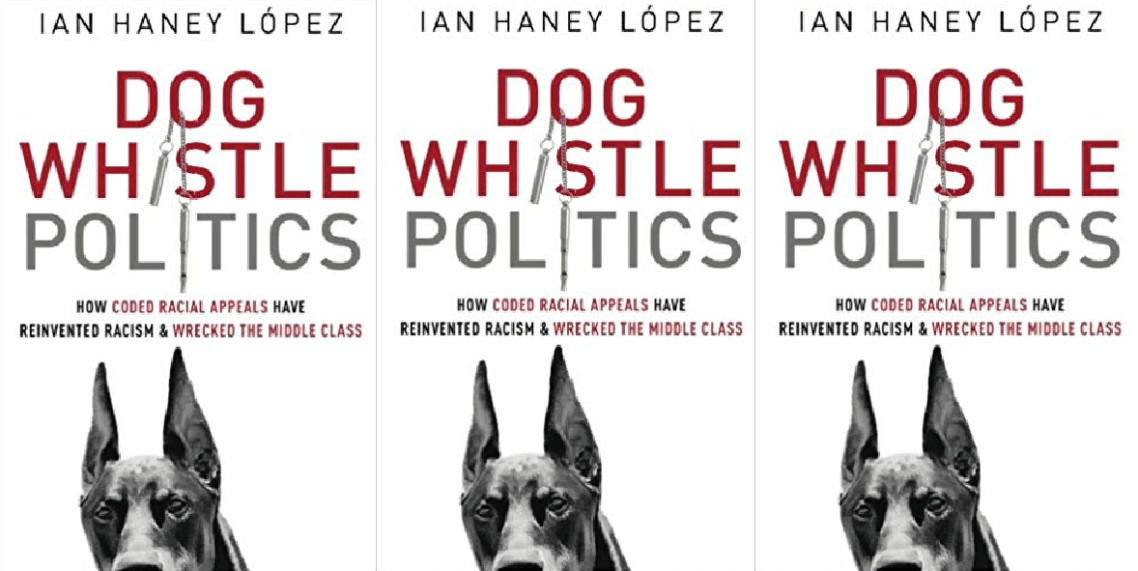
#3 – Dog Whistle Politics: How Coded Racial Appeals Have Reinvented Racism and Wrecked the Middle Class
by Ian Haney López
There’s probably some interesting analysis that could be made about the subtitles of modern American non-fiction books but this is neither the place nor the time so I’ll just say that out of all the books on this list Haney López has given his the subtitle that most succinctly summarizes his thesis: Coded racial appeals have reinvented racism and wrecked the middle class.
Through his research, Haney López traces the history of coded racial appeals in post-Civil Rights American politics, especially with respect to how politicians have used it to get white Americans to vote against their own economic self-interest. One of the social victories of the Civil Rights movement is that after the dust settles the large majority of the population agreed that overt racial prejudice was morally wrong, but the Civil Rights Movement could not expel internal prejudices and bias from millions of Americans and as a result, unscrupulous politicians jumped at the opportunity to use racially loaded language to woo voters and convince them that demolishing the social safety net and implementing economic policy designed to enrich the wealthy and shirk the middle class were actually in their best interest.
Dog-Whistle Politics allow people to spew thinly-veiled racial vitriol while still claiming to not be talking about race (for example, referring to immigrants as rapists and drug dealers while insisting that you’d welcome them in if only they immigrated the “right way”) and never has it been more relevant than in Trump’s America. Haney López traces the history and mechanics of Dog-Whistle Politics and lays bare how the political manipulation of large swaths of white Americans has fundamentally damaged this country. Any path forward towards racial and economic justice will need to be grounded in our history and Haney López has given an essential tool with which to start.
Unofficial Theme Song: “Hood Politics” by Kendrick Lamar
#2 – Being Mortal: Medicine and What Matters in the End
by Atul Gawande
Atul Gawande is someone I would love to have as an uncle and hate to have as a sibling. He’s a surgeon at Brigham and Women’s Hospital in Boston, a professor at the Harvard School of Public Health and Harvard Medical School, CEO of nonprofit healthcare venture Haven Healthcare, staff writer for the New Yorker, and oh yeah best-selling author of four books. You’re accomplished Atul, WE GET IT.
But jokes aside, Being Mortal is a moving and powerful meditation on ageing in the modern world and how the scientific advances that allow us to live longer than ever create a group up people living healthy into unprecedented old age. He explores how cultures around the world care for their old; the age-old model of multi-generational households still persists in many places but in industrialized and urban societies moving out of the house and living on your own has become a right of passage, leaving our aging population to seek out nursing homes or assisted living facilities to meet their needs.
With that he also speaks heavily on the period at the very end of many lives these days that is so rarely discussed. The focus of modern medicine has been to prolong life as long as possible in all cases, but as we get to the age where human bodies were simply not designed to function Gawande muses about the potential of pain management, hospice care, and physician-assisted suicide.
A brilliant and heart-felt book about family, aging, and our values as a society, Gawande does not offer firm moral judgement but rather opens up the world of modern medicine so that we may think deeply about what matters to us as individuals, families, and societies when we face the inevitability of death. The type of book where after reading you need to take a long walk (and maybe call your parents and/or grandparents and cry a bit), Being Mortal is a loving exploration of the importance of acknowledging the inevitability of death and facing it with dignity and care.
Unofficial Theme Song: “(Don’t Fear) The Reaper” by Blue Oyster Cult
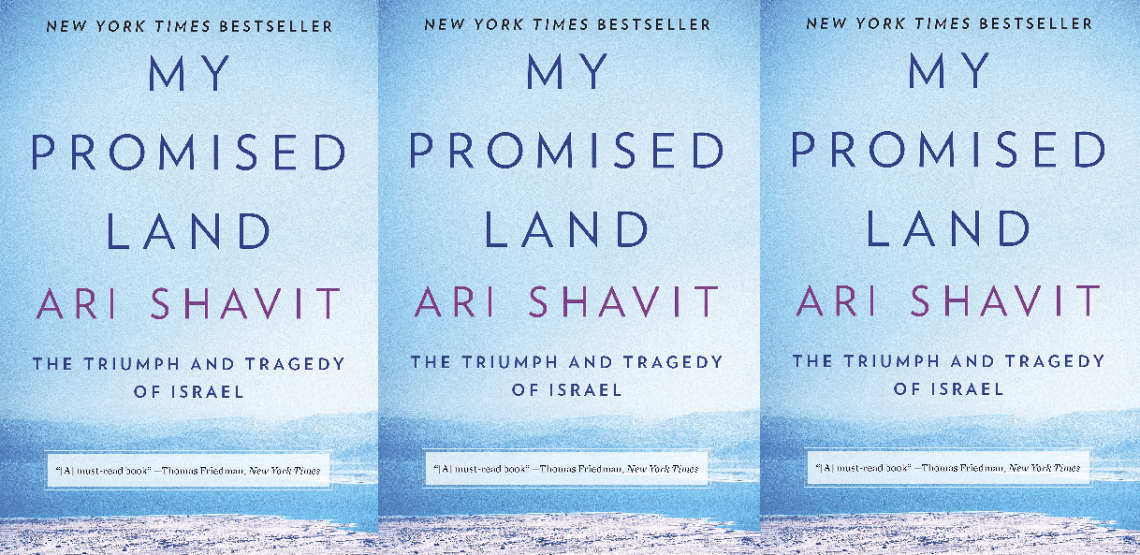
#1 – My Promised Land: The Triumph and Tragedy of Israel
by Ari Shavit
Israel is a nation of contradictions. A socialist, national liberation movement that’s also an imperialist, colonial usurpation of land. A secular religious democracy that uses its Defense Force to maintain apartheid-like structures in annexed territory. Early Zionists warned that the Jews were not safe in Europe and needed their own nation for self-protection; even in their darkest nightmares they could not have foreseen how correct they were. Early anti-Zionist warned that the Jewish settlers sought to remove native Palestinians from their land and dominate the non-Jewish population; they too would see their prophecies come true. In My Promised Land, Shavit looks back at his own family’s relationship with Zionism and Israel and weaves together the stories of the early Zionists who built Israel, the people who now live in the Jewish homeland, and those who have been made to suffer to make way for the Zionist dream.
Shavit starts with the early Zionists who enthusiastically traveled to settle in what was at the time the Ottoman Empire. He follows the story of Israel through 15 more episodes from 1897 to 2013, eschewing the commonly tread Israel vs. Palestine narratives to look deeper into what it truly meant for his family to be Zionists and Israelis. Reflecting on the massacre and expulsion of Arabs in the city of Lydda during the 1948 war he makes it clear that this it was not just an evil twisting of Zionist ideals but in fact inevitable based on the circumstances. In one of his most powerful passages he proclaims, “Either reject Zionism because of Lydda, or accept Zionism along with Lydda.”
Israel finds itself at a precipice; it does not have the support of the international community it once did and as it tries to fend off the apartheid accusations, the more settlements created in the West Bank and the more land annexed the more accurate the analogy seems to be. As tension continue to rise My Promised Land is an essential book to understand what is truly at stake for Israel and those who call it home. Much more than a family history or historical analysis, Shavit has created a work that is capable of conveying all the pride of achieving national liberation in the face of global oppression, all the sorrow of coming to terms with the human cost required to accomplish that goal, and all the anxiety of looking forward and not knowing what would come if the national experiment fails.
Unofficial Theme Song: “Why Can’t We Be Friends?” by War

Slam Zuckert is a municipal bureaucrat. He sees a lot of movies and reads a lot of books and sometimes writes about them. His favorite movie is There Will Be Blood, his favorite mathematician is Georg Cantor, and his least favorite mathematician is Leopold Kronecker.

 Keep it Going Louder