

Keep It Going Louder in conjunction with the Slam Zuckert Institute of Cultural Opinions Present…
The Best Documentary Films of the 2010s
“If you disagree, fight me”
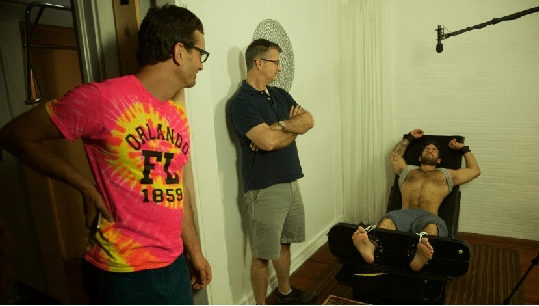
#20 – Tickled
Directed by David Farrier and Dylan Reeve
When New Zealand television reporter David Farrier started his lighthearted investigation into competitive endurance tickling videos, he expected to have one of his usual “quirky and odd stories” for the network. But his inquiry to Jane O’Brien Media, the producers of the tickling videos, got an aggressive and homophobic response and he quickly found himself in a bizarre world of exploitation, homophobia, sex, and power.
The luck of finding the right story at the right time can turn a silly new story into a riveting document of our times and Farrier was the exact right person to stumble into this story. Doggedly persistent in his investigation, Farrier literally travels around the world to follow the tickling ring, poking and prodding at every turn to reveal its dark underbelly. Full in the stranger-than-fiction genre, Tickled whisks us along as Farrier exposes the corruption, exploitation, internet bullying, and malice of the dark forces behind, yes that’s right, competitive endurance tickling.
Internet-Sourced Trivia:
During a showing of Tickled at the True/False Film Festival, the film had to be stopped while police escorted two people from the movie theater. The two were allegedly private investigators trying to record the film.
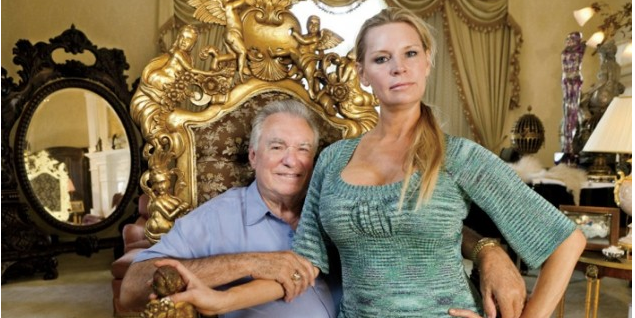
#19 – The Queen of Versailles
Directed by Lauren Greenfield
In The Queen of Versailles we follow timeshare mogul and rich sack of shit David Siegel and his wife Jackie as they work to build an offensively large house in Florida that they have so aptly named Versailles. Everything looks peachy keen for them but then the Great Recession hits and David’s predatory timeshare business starts to struggle causing the mansion and the family to fall into disrepair.
More than just documenting the family’s dysfunction, we look beyond into the very nature of wealth in America. How those who search for it often acquire it at the expense of others and how that wealth impacts who you are and who you grow to be. We see Jackie, a woman who started out with a promising intellectual future (graduated from RIT with a degree in computer engineering, worked as an engineer after college), who since she acquired wealth seems to have suffered from complete atrophy of the brain. After she married David his massive wealth let her live the life of luxury but after the recession hits and they cutback on household staff she seems incapable of completing even the most basic tasks on her own.
A candid look at the impact of wealth on those who lust for it and those who are dragged along and crushed in its wake, The Queen of Versailles lays bare the grim reality of America’s obsession with wealth and provides enough schadenfreude to satiate your deepest disdain for the greedy.
Internet-Sourced Trivia:
Now that the housing market has recovered the Versailles property is currently the 4th most expensive house in the US.
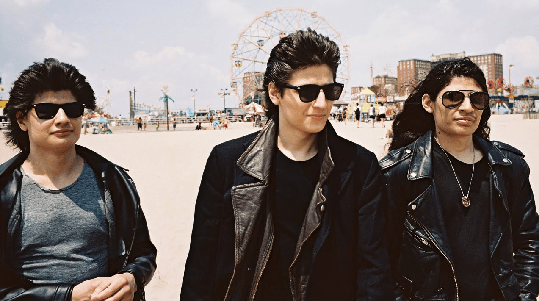
#18 – The Wolfpack
Directed by Crystal Moselle
Forbidden by their parents from leaving their apartment on the Lower East Side of Manhattan, the seven children (six brothers and one sister) of the Angulo family watch, and meticulously recreate, their favorite films to pass the time. When 15-year-old Mukunda (the 3rd youngest) disobeys and leave the apartment, all of the brothers decide to explore the world outside and oh boy are they in for a treat.
The massive irony of them needing movies to connect to the world when they live in the center of world culture is not lost on us, when they walk outside and explore New York City it feels like they have just got off a plane from a remote island they have never left. The difference between what we consume and our usual social norms is amplified as we see how unsettling it is for someone to behave in the real world like we see in movies (wearing masks while walking the streets, randomly splashing water in our face and running it through our hair…).
Their oppressive parents feel too unintentionally cruel (they were kept inside because of their parents paranoid fear of the dangers of the world) to be representative of anything more than this specific family, but the film, as through-provoking as it is confounding, is an ode to the resiliency of youth and the power of movies and worlds they can take us outside of our own.
Internet-sourced trivia
Crystal Moselle met the brothers in 2010 when she saw them walking in Manhattan with waist-long hair and black Ray-Ban sunglasses à la Reservoir Dogs.
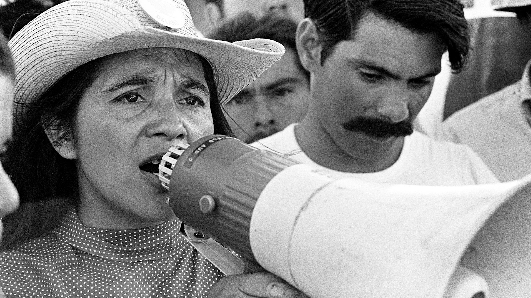
#17 – Dolores
Directed by Peter Bratt
Dolores chronicles the life of Dolores Huerta, labor leader and civil rights activist who co-founder the National Farmworkers Association (later United Farm Workers) with Cesar Chavez and was one of the main organizers and negotiators in the 1965 Delano grape strike in California. Although she’s been highly decorated, she has received the United States Presidential Eleanor Roosevelt Award for Human Rights, the Presidential Medal of Freedom, and numerous honorary degree, she remains largely unknown in the American conscious (damn you sexism) and Bratt’s poignant and inspiring documentary aims to change that.
Covering her entire life, from birth till the present day, Dolores is a sharp and lively film that is not bogged down by any of the usual biographical doc traps. Interviews from Angela Davis, Nancy Pelosi, Hillary Clinton, Arturo Rodriguez, Gloria Steinem, and of course Dolores Huerta herself, along with a bevy of archive footage to add brilliant context and texture, provide plenty of information and insight into the life and accomplishments of Huerta. We explore what drove her to a life of activism and advocacy and we she keeps fighting after all these years. A vivid example of the intersectionality of oppression, we watch as Huerta fights against sexist, racist, and classist forces from without and within; the opposition from the capitalist class is expected but it’s all the more painful after Cesar Chavez’s death when she is not elected president of the United Farm Workers, the organization she founded with Chavez, for what seems like sexist reasons.
The film is as inspiring as its subject, Dolores reminds us that if we stand up and work together we can fight against oppression and exploitation and be victorious. It will never be easy, but as goes the saying that Huerta coined in 1972 and others have since translated and amplified, “sí, se puede”.
Internet-Sourced Trivia:
Carlos Santana, Executive Producer of the film, was a major force in its development. He reached out to Bratt about making the documentary in 2013 and Bratt was quoted as saying “When Carlos called about doing the film, I had to do it. I’ve always wanted to make a superhero movie and as Carlos says, she’s a real wonder woman.”

#16 – Brooklyn Castle
Directed by Katie Dellamaggiore
In the hallowed halls of Brooklyn’s Intermediate School 318, championship banners hang as far as the eye can. Elizabeth Spiegel started as a part-time chess teacher in 1999, by 2007 was made a full-time chess teacher (surely one of the few in US public schools), and since then IS 318 has come to dominate the world of youth chess, winning dozens of national championships; sixth, seventh, and eighth-grade titles; and even the United States Chess Federation national high school championship which is usually won by, well, high schools. Brooklyn Castle follows the students and staff of IS 318 as they train and do battle on and off the chess board, facing off against players from other schools and budget cuts induced by the Great Recession.
Chess can be a cruel game, especially for youth competitors. There are no lucky bounces, no teammates or refs to blame, no six-foot-tall 7th grader on the other team while you’re all waiting for your growth spurt. Just you and your opponent locked in a battle of wits. In a tournament, losses are devastating as every game can feel like a referendum on your intelligence. To make matters worse, when you’re in a tournament all the games are going on at once so if you lose you have to walk back to your team’s room and tell everyone about your failure. But with struggle comes growth, you learn more about life from losing that from winning, and we can see the students begrudgingly learn these lessons during each of their tournament losses.
The movie highlights the admirable and noble work of the IS 318 school staff, but the children are the real stars of the show. We follow a colorful cast of students as they celebrate victory and struggle with defeat; some of them are budding superstars who feel the weight of the whole team on their shoulders, some are just fighting to win a single tournament game. They all have lives outside of chess as well, many of them preparing to apply for NYC’s notoriously difficult select admission schools and some of their families who are just scraping by to live in post-recession NYC. The success of IS 318’s chess program and chess players is a testament to the power of public education and a supportive community and Brooklyn Castle is an insightful and fun look into the wonderful world IS 318 has created within those 64 black and white squares.
Internet-Sourced Trivia:
In 2008, IS 318 students Rochelle Ballantyne played against Garry Kasparov in chess match now known as “The Harlem Shake”.

#15 – Louder Than a Bomb
Directed by Jon Siskel and Greg Jacobs
When I was in high school we would have an annual poetry week and all of our English classes would visit the library for a workshop with an old Irish-American poet whose name I can’t remember. At the end of the week there would be an open mic and we could get extra credit for performing a poem. Sophomore year I wrote and performed a piece called “Serf’s Up” a diatribe against feudalism from the perspective of a medieval surf. I thought it was funny and clever, the audience apparently disagreed and responded with a confused silence. After me a girl in my class performed a powerhouse piece about her parents’ relationship issues and how it impacted her and her siblings. I’m glad I went before and not after her.
Every year the Young Chicago Authors organization puts on what’s billed as the world’s largest youth poetry festival, over 1000 young poets from the Chicagoland area gather for workshops, events, and the main attraction: the poetry slam competition. The film follows a diverse group of poets as the obsess over every word, trying to perfect their craft knowing that 1000 other kids in the city have the same prize in mind.
The stunning poetry performances are the centerpieces of the film, but through the creation process we learn more about the lives of the youth who we follow. Poetry give them an outlet with which to express their experiences and we see how the power comes just as much from working on the poems with their classmates, giving and getting feedback, and developing the language with which to express their internal lives, and gaining the confidence to perform as it does performing itself. The extremely talented youth profiled in Louder Than a Bomb are an inspiration for artists of any age, through their poems they are empowered to share their stories with the world and demand that the world listen.
Internet-Sourced Trivia:
In a Jordan-esque situation only fitting for Chicago, Chance the Rapper did not make his school’s Louder Than A Bomb slam team when he first tried out.

#14 – Inside Job
Directed by Charles Ferguson
If you’re looking to convert someone to the Church of Elizabeth Warren and they only give you 110 minutes to do so, throwing on Inside Job and holding their eyes open Clockwork Orange-style is probably your best bet. A dissection of the 2008 financial crisis in five parts, Ferguson lays bare the financial service industry’s systematic corruption and greed and the damage it has done to the people of the United States.
Sharp, searing, and righteously angry Inside Job does not old back on any of those at the levers of power in this country, heaping criticism across the political spectrum and explaining the 2008 financial crisis in a lucid and succinct fashion. Like the Big Short but without any of that gimmicky narrative bullshit, Inside Job cuts right to the heart of the financial crisis and shows how it happened, who could have prevented it, and how little the major players in the finance industry seem to care about it happening again.
Internet-Sourced Trivia:
Before working on Inside Job, Ferguson began working with CNN in 2012 on a documentary about Hillary Clinton. The film had to be cancelled due to pressure from the Clintons, prominent Democrats, and the Republican Party.
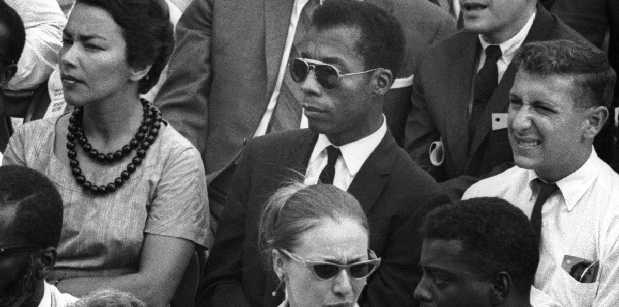
#13 – I Am Not Your Negro
Directed by Raoul Peck
Based on James Baldwin’s unfinished Remember This House along with other writings by Baldwin, mostly in the 1970s, I Am Not Your Negro is a scathing and powerful assessment of race and progress in America. Although all of Baldwin’s words used in the film are well over 30 years old, it’s shocking to watch the film and see how strong a grasp Baldwin had on the racial climate in America and how persistent this toxic climate has been. Observant, eloquent, and never afraid to tackle sensitive subjects, Peck gives us a stirring portrait of James Baldwin updated for the current generation that shows how our history never stays in our past.
Internet-Sourced Trivia:
Due to their fear of black Americans, the FBI’s file on James Baldwin contains 1,884 pages of documents and can be accessed at this web site: https://vault.fbi.gov/james-baldwin

#12 – Peace Officer
Directed by Scott Christopherson and Brad Barber
It’s rare we are able to dissect police abuse of power in America without race being a factor. Race and policing in American have been inextricably linked since the first slave patrol were organized in the early 1700s, and although the police departments we see in Peace Officer have been undoubtedly been shaped by the US’s history of racial oppression, the situations we review in Peace Officer are almost all white which gives us a unique look at how this era of militarized police impacts everyone in the US regardless of race or ethnicity.
Peace Office centers on retired police officer William “Dub” Lawrence who as a sheriff in the 1970s founded Utah’s first SWAT team. After the same SWAT team he founded killed his son-in-law in 2008 he began investigating police killings and uncovers a troubling pattern of police escalation, reckless violence, and unnecessary death. While we follow Lawrence on his investigations, Christopherson offers a lucid history of police militarization in America, starting with the birth of the SWAT movement after the 1965 Watts riots and going all the way up to the Black Lives Matter protests in the mid-2010s. Jarring and poignant, Peace Office takes a look at the human cost of police militarization; even removed from the other systems of oppression in the country, the police can still wreak havoc on the people they’re supposed to be protecting and most of the time are given no consequences or incentive to improve.
Internet-Sourced Trivia:
The 1033 Program in the US allows for the transfer of excess military equipment to civilian law enforcement agencies. Since 1997 over $5.1 billion in military material has been transferred from the Department of Defense to local law enforcement agencies, mostly ammunition, cold weather clothing, sand bags, medical supplies, sleeping bags, flashlights and electrical wiring but also aircrafts, watercrafts, armored/weaponized vehicles, grenade launchers, and bayonets.

#11 – Citizenfour
Directed by Laura Poitras
Sometimes, like in Tickled (#20), you pull a thread and find a story that’s much more than you bargained for. Other times, as Poitras found out, you work a story to the bone and then the scoop of the decade comes to you. After spending years reporting on US surveillance programs launched after 9/11, Poitras received an encrypted email from “Citizenfour” summoning her to Hong Kong along with Glenn Greenwald and Ewen MacAskill. Citizenfour documents their interviews with Citizenfour (revealed to be Edward Snowden), the information he releases, and the fallout from his decision to blow the whistle on the NSA.
What follows is a part geo-political drama, part procedural spy thriller, and part terrifying reality check on our government’s willingness to abuse their surveillance capabilities. The precautions that Poitras took to ensure that this movie could be shown are worthy of an award in and of itself (keeping files on encrypted drives, flying straight to Germany from Hong Kong to edit the film so that the FBI wouldn’t have a chance to search or seize anything…) and all the effort was well worth it. Autocratic governments are already using mass surveillance to control their population, so this is no longer just a hypothetical; ruling parties can and will use these technologies for their own benefit, it up to us as citizens to decide what we will do about it. We’re not at a point of total surveillance in the US (yet) and through our democratic process we still have the ability to limit the wanton use of surveillance tech (for now), but Citizenfour warns us that if we don’t stay vigilant we may soon lose what little technological freedom we have left and with that our freedom to privacy in total.
Internet-Sourced Trivia:
Snowden chose Citizenfour as his alias as he considered himself the fourth person to try and expose NSA’s mass surveillance system, the first three being Thomas Drake, William Binney and J. Kirk Wiebe.

#10 – The Square
Directed by Jehane Noujaim
A bold look at Tahrir Square during the Egyptian Revolution of 2011, The Square is such a movie of its moment that it was updated multiple times after its initial release to add in further developments in the revolution. The Square does a masterful job capturing the energy of the protests at Tahrir Square and the courage of those who were willing to put their lives on the line for the freedom and dignity of their fellow citizens.
Unfortunately, as we see in The Square, the idealism of a righteous revolution is often derailed by the political realities of governing a country. After the Mubarak government was overthrown and Morsi was elected, another round of protests emerged within a year that resulted in a military coup d’état putting Abdel Fattah el-Sisi at the helm where he remains to this day (he was “elected” in 2014 with a farcical 97% of the vote and then “reelected” in 2018 winning, again, 97% of the vote).
The Square is worth watching for the history lesson alone but the real value comes from the streets-eye level view we get of the revolution, following Egyptians who previously had no political ambitions but in the face of tyranny decided it was time to rise up for their rights. Uplifting and discouraging all at once, The Square lays out the messy reality of a revolution and lets us watch as history unfolds.
Internet-Sourced Trivia:
The Square is both the first Kickstarter film and the first Netflix film to be nominated for an Oscar.

#9 – 5 Broken Cameras
Directed by Emad Burnat and Guy Davidi
In 2005, Palestinian farmer Emad Burnat purchased a camera to record the birth of his son. Living in Bil’in, a small town about 2 miles North-East of the 1949 Armistice line, that camera soon turned from Burnat’s family to the protests against the Israeli construction of the West Bank barrier. As Israel bulldozed their village’s olive groves and the majority of Bil’in’s farmland, Burnat records the Palestinian protest that grows along with his son, using a new camera each time one is broken by the Israeli Army, the protests, or the effects thereof. Each camera tells its own part of the story as Israel responds to the Palestinian response to the Israeli response to the Palestinian response…
The Israel-Palestine conflict is one of the widest known global stories of the past 70 years, however often missing from the literature are the voices of those who live in the small towns in the West Bank and Gaza. Rare is there a novel or non-fiction book written about the day-to-day life of Palestinians, their views, joys, trials, and hardships. 5 Broken Cameras is an essential film because it is just that, you can make it into a metaphor for the conflict at large if you’d like but more importantly it is one man’s recording of his own life and the conflict’s impact on his small town.
Internet-Sourced Trivia:
When Davidi screened the film for Israeli high school students he said, “they got angry at me, accused me of lying and being a traitor. But the anger is really against the whole system that lied to them….So I tell the kids, ‘Go ahead and get mad at me. Take it all out on me. Soon you will realize that your anger is not against me, but against the whole system that lied to you.’”
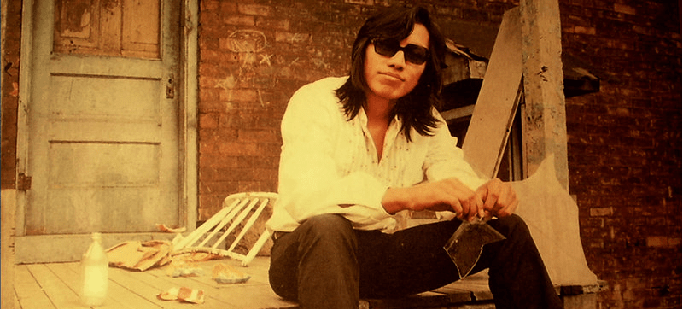
#8 – Searching for Sugarman
Directed by Malik Bendjelloul
The first musical career of Sixto Rodriguez was short lived. He recorded a few albums with Sussex Records in the 1970s, the sales in the US were tepid, and he faded into obscurity…or so it seemed. Unbeknownst to him, a decade later and halfway across the globe, his music became a cultural phenomenon. His songs became part of the soundtrack of the anti-Apartheid movement in South Africa where bootleg copies of his album At His Best went platinum. Rumors swirled about the life and possible death of Rodriguez since censorship from the Apartheid regime prevented pretty much any information about banned artists from entering South Africa. In the late 1990s, two Cape Town fans of Rodriguez decided to go looking for the truth about him and record their journey, thus Searching for Sugarman was born.
Using the two superfans’ journey as a jumping off point, Bendjelloul bring us the life of Rodriguez and the bizarre story of his South African fame. The disparity between Rodriguez’s music’s monstrous success in South Africa and non-existent impact in the US goes to show just how random and arbitrary things like fame and creative careers can be. How many things would have had to be different for Rodriguez to have caught on in the US like he did in South Africa? A notable co-sign? Another musician bring him along on tour? Some sort of mystic mythos like the kind he had in South Africa? Sometimes the stars don’t align and Searching for Sugarman remind us of the glances with popularity that can put our lives on wildly different paths depending on how the ball bounces.
Internet-Sourced Trivia:
Since the films release Rodriguez has experienced a belated wave of fame in the US. He has toured regularly, appeared on talk shows, and has been profiled for various print publications.
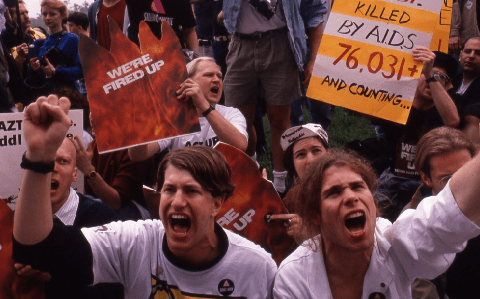
#7 – How to Survive a Plague
Directed by David France
Created using over 700 hours of archived footage from news coverage, interviews, protests, and meetings, How to Survive a Plague chronicles the early years of the AIDS epidemic and the activist groups ACT UP and TAG. A testament to the power of grassroots activism and a brutal reminder of the cold-hearted disdain the US Government showed for people impacted by the AIDS epidemic, How to Survive a Plague is an informative and riveting look at the activists groups as may of their members quite literally fight for their lives.
A bold and personal film (it’s dedicated to Doug Gould, French’s partner who died of AIDS-related pneumonia in 1992), French is able to capture the energy and the urgency of the moment with ground-level footage (often taken by activists themselves) while weaving in important historical, scientific, and cultural context. How to Survive a Plague is a powerful look at what happens when ignorance and prejudice causes those in power to turn their backs on those in need. In an era of increasing political turmoil, French provides a roadmap for how direct action can be effectively utilized to demand, not beg, for accountability.
Internet-Sourced Trivia:
Despite over 7600 known AIDS-related deaths in the United States by the end of 1984, President Ronald Reagan did not say the word “AIDS” in public until September 17, 1985.

#6 – The Interrupters
Directed by Steve James
The Interrupters is a sobering documentary about the overwhelming forces that create an environment where violence thrives and those brave enough to stand up and try to fight it. Directed by the prolific documentarian Steve James (Hoop Dreams, No Crossover: The Trial of Allen Iverson, Life Itself, America to Me…) and co-produced by Alex Kotlowitz, one of the preeminent chroniclers of urban plight in Chicago (author of There Are No Children Here and An American Summer), the film follows the work of the Chicago Project for Violence Prevention’s program CeaseFire (now called Cure Violence) where community members work with young men and women to try and prevent harmful altercations, thus “interrupting” the cycle of violence.
The majority of the film focuses on three Interrupters as they try to steer younger members of their community in the right direction; often the people they work with have strikingly similar past experience to Interrupters and therein lies one of the main strengths of the program. Any while the sometimes find success, The Interrupters doesn’t gloss over the challenges they all face whether it be the day-to-day difficulties of those caught in the cycles of violence that prevent them from leaving or national housing and employment trends completely out of their control. This is not a film with a kumbaya-we-are-going-to-finally-solve-violence type storyline, James shows us everything stacked against these economically devastated communities and while the outlook can look bleak, the Interrupters stand strong and continue to fight to better the lives of everyone in their community, one neighborhood, one block, or one person at a time.
Internet-Sourced Trivia:
An independent evaluation in New York City of the Cure Violence (previously known as CeaseFire) program by John Jay College found reduction in violence, shifts in community norms, and improvements in police-community relations in communities involved with the program.

#5 – Jiro Dreams of Sushi
Directed by David Gelb
In the heart of Tokyo sits Sukiyabashi Jiro, a 10-seat sushi restaurant that is widely considered to be the best in the world. Just some numbers before we get too deep: Jiro Ono, the owner and head chef is currently 94 years old. He has been a qualified sushi chef for 68 years and has owned and operated Sukiyabashi Jiro since 1965. Jiro is regarded as the greatest living sushi chef.
Jiro Dreams of Sushi is a mesmerizing and poetic film, we follow Jiro as he runs the day to day operations of Sukiyabashi Jiro, obsessing over every tiny detail from the dishes and towels to the cooking of rice to, most importantly, the fish selection and preparation. A meditation on greatness and the pursuit of perfection, each piece of sushi is an individual work of art that comes together for only a moments times before being consumed and enjoyed. (One of the things that has stuck with me most from this film is Jiro’s theory of optimum tastiness., he says that each food has a moment when it is its most tasty and that is the exact moment it should be eaten. For sushi it is right after the chef combines the ingredients so when he places sushi on your place it is almost blasphemous to wait for everyone else, you must eat it as it’s served. I think about this theory almost every time I cook, and while I don’t usually make bite sized morsels I try to think about when each dish would be at its optimum tastiness after cooking. I often overthink and debate whether for a plate-sized dish the optimum moment of tastiness should be the first bite, the middle bite, or somewhere in between…but we can save that for another time).
With Jiro’s single-minded focus on sushi excellence comes a subtle family drama as well. Jiro’s youngest son left Sukiyabashi Jiro years ago to start his own sushi restaurant (which is a mirror image of Sukiyabashi Jiro, owing to the fact that Jiro is left-handed and his son is right-handed) while his eldest son still works under him, anticipating taking over the restaurant when Jiro’s time is done. The tension is palpable sometimes but all are committed enough to sushi to not let it impact the quality of the food. All in all, Jiro Dreams of Sushi Gelb is a compelling and mouth-watering film that has us pondering our own meaning and purpose in between bites of the best sushi in the world.
Internet-Sourced Trivia:
An international sushi kerfuffle arose in 2014 when a group of chinese students asked for cooked fish at Sukiyabashi Jiro and then complained about it online when their request was denied. The internet lit them up so relentlessly that they returned to the restaurant to apologize for their actions and ignorance. Takashi Ono, Jiro’s son, accepted their apology and said, “Everyone makes mistakes.”

#4 – 12 O’Clock Boys
Directed by Lotfy Nathan
If you happen to be on the streets of Baltimore on a Sunday afternoon, there’s a chance you’ll hear the engines in the distance. As they come into view you’ll see a caravan that looks like a combination between a dirt bike gang and a circus and as they pass you’ll be left speechless with the skill, recklessness, and grace that the riders possess. Daredevils on dirt bikes with balance like a tightrope walker, popping wheelies on 2-wheelers, 4-wheelers, and hell, even bicycles with no front wheels (existential questions: can you pop a wheelie on a unicycle?). Lotfy Nathan, an art student at the time, saw the 12 O’Clock Boys ride (names because they drop the bikes straight back so they’re up and down like 12 noon on a clock) and for the next three years followed Pug, a 13-year old at the start, as he tried to join their ranks.
Nathan knows that the riders themselves tell the most compelling stories and both verbally and visually he lets them take center stage. We ride along with them as they cruise the streets of Baltimore and Nathan’s eye for composition turn their afternoon rides into high speed visual umami. But 12 O’Clock Boys is much more than just a high-minded highlight reel, as we watch Pug grow in Baltimore we get a deeper sense of why these young men are out there every week putting their lives on the line for a ride. Poverty, failing education systems, combative relationships with the police, and the lack of economic opportunities all hang over the head of Pug’s mom Coco as she watches Pug devote himself to riding. In another neighborhood Pug, fascinated with animals, may have had the resources and opportunities to access all kinds of zoological recreation, but he lives in West Baltimore and instead he searches for freedom and purpose with his back wheel on the ground and his front wheel to the sky.
Internet-Sourced Trivia:
I don’t have any hard evidence to prove this but I am 99.99% sure that 12 O’Clock Boys served as inspiration for that sweet scene in Creed where Michael B. Jordan is joined on his run by wheelie-popping dirt bike riders as Meek Mill blast in the score.
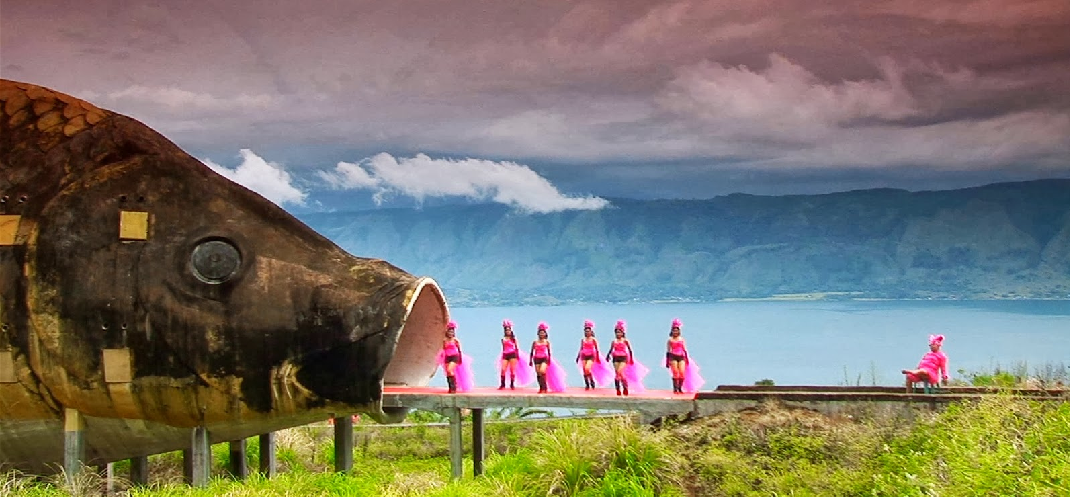
#3 – The Act of Killing
Directed by Joshua Oppenheimer
Not for the faint of heart or those who want to feel good about humanity, The Act of Killing is a harrowing and disturbing viewing experience. But it could be no other way for a film whose goal is to expose the brutality of the Indonesian mass killings of 1965–66 and unmask those responsible.
A surreal film that features stunning interviews with the actual perpetrators of these killings, Oppenheimer follows the members of the Pancasila Youth as they reflect on the atrocities they committed and then reenact them in the cinematic stylings of their favorite genre films. Watching The Act of Killing is like walking through a UN Human Rights Report filtered through a fun house mirror, the film exposes the historical atrocities while also becomes a picture of the psychological effects of oppression on the oppressors (à la Frantz Fanon) as we watch death squad leader Anwar Congo come to terms with his acts decades after the fact. An important window into the minds of those at the center of a complete and utter failure of society, The Act of Killing is a profound film that speaks to much more than the mass killings in Indonesia. It asks us to reflect on our own personal and national culpability and see that mass violence and killings can only happen when enough people stand by and let it.
Internet-Sourced Trivia:
The cultural impact of The Act of Killing contributed greatly to the US government’s 2017 decision to declassify thousands of documents related to the Indonesian mass killings.
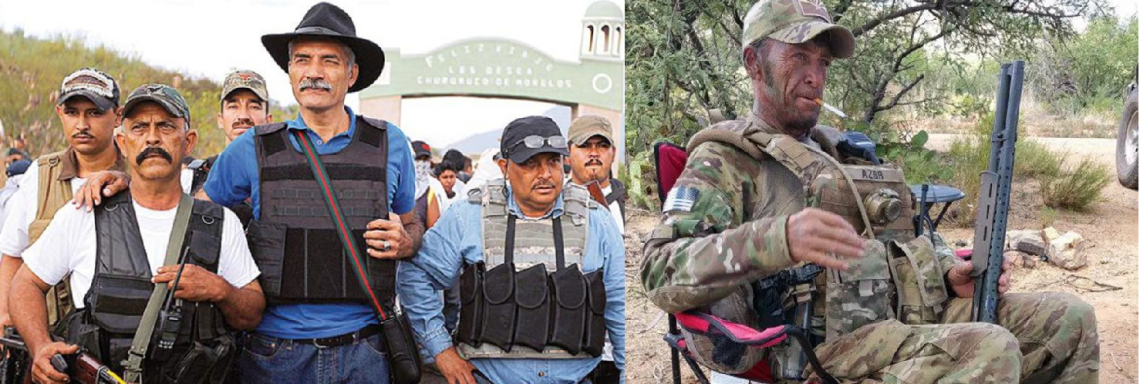
#2 – Cartel Land
Directed by Matthew Heineman
On both sides of the US-Mexico border, groups of citizens feel like their governments have failed them. The Drug Cartels have turned the border into a flashpoint, meeting anyone who gets in their way with violence and leaving behind a wake of blood, drugs, and grieving families, and US government’s border and drug laws can seem to only make things worse. Cartel Land put us right in the middle of two vigilante groups, two-thousand miles apart and on opposite sides of the border, who have decided that if their governments won’t take action, they will.
South of the border in Michoacán we follow the Autodefensas and their leader Dr. José Mireles as they lead an uprising to rid their cities of the Knights Templar Cartel. North of the border in Arizona we follow Tim Foley, founder of Arizona Border Recon, a paramilitary group whose stated purpose is to prevent drug smuggling, human trafficking, and terrorism. His militia-like group claims to work to uphold the law when the government can’t but the members of the group seem to be fueled as much by xenophobia and the desire to keep Mexicans out of the US as they are by the desire for public safety.
The most striking thing about Cartel Land is how deeply Heineman is able to embed himself in the actions of these groups. We walk along with the Arizona Border Recon as they patrol the border area and detain individuals under dubious legal pretenses. We go with the Autodefensas as they attempt to arrest members of Knights Templar and expel them from their cities, and when a gunfight breaks out we duck behind a car and peek out to watch. We even travel with Cartel drug manufacturers out into the Mexican desert where they cook up meth to smuggle into the US. A film bold as bold as any this decade, Heineman never shies away from the action and it gives us a view of the drug war unlike any other.
From the on-the-ground camerawork to the swooping aerial shots worthy of a Taylor Sheridan western, Cartel Land paints a vivid picture of corruption, power, rebellion, and vigilante justice. The leaders and their groups are given the benefit of the doubt but Cartel Land does not hold back when they start to fall victim to their own success. Thus Cartel Land ends where we started with the cyclical nature of power and corruption in two countries separated by a river and some fence, locked together with Cartel forces that they work to combat while their populations unwittingly enable.
Internet-Sourced Trivia:
In the late 2010s a group of the Autodefensas began selling drugs and eventually became their own cartel now known as “Los Viagras”.
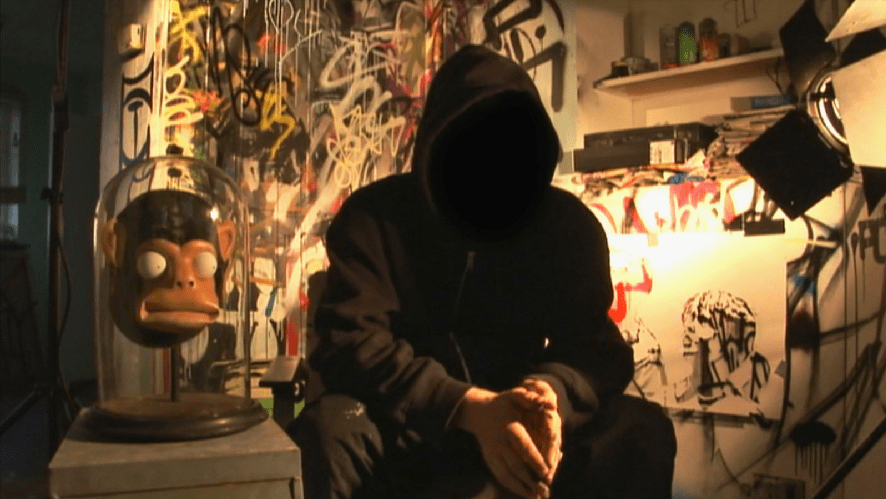
#1 – Exit Through the Gift Shop
Directed by Banksy
Are we sure that Exit Through the Gift Shop is even really a documentary and not just a brilliant work of concept art from Banksy? The answer is a resounding no, but if we’re willing to take the leap of faith, and oh boy am I, then Exit Through the Gift Shop is a stunning time capsule of street art, a twisting and turning story of creation and destruction, and a wise mediation on the nature of modern art and creativity.
The movie starts with Thierry Guetta, a vintage clothing proprietor who is inseparable from his camcorder. He finds out that his cousin is the street artist Invader and starts tagging along with him as he creates his street art, filming all the while. He continues to film a who’s-who of street artists eventually getting connected with the notorious Banksy who encourages him to compile all his footage into a movie. The result is the unwatchable Life Remote Control, an hour and a half film that consists of distorted video, second-long clips, and an unlistenable audio track.
From there Banksy takes the reins of the film and to keep Guetta busy he suggests that he put on his own art show. Guetta dubs himself Mr. Brainwash and immediately starts churning our hacky Banksy knockoffs with the help of a stable of underlings who do all the actual work. Naturally, his show becomes a sensation. It’s the art event of the season in LA and he sells his works for hundreds of thousands of dollars.
Maybe it’s only fitting that we know next to nothing about Banksy, one of the most widely known visual artists currently working. He is at once a global celebrity and a ghost, famous both because and in spite of his anonymity. Exit Through the Gift Shop gives us a look inside the usually hidden world of street-art creation, Guetta may be outside of his mind but he certainly was an excellent documenter of the artists he spent time with. As Banksy creates his own artistic Frankenstein’s Monster we’re never sure how much was planned and how much just came to be. Regardless of the intent behind the actions, it all certainly happened and we’re left to try and sort out the aftermath. A fascinating exploration of the artistic process, fame, and the intersection of modern art and commercialization, Exit Through the Gift Shop is a mind-bending film that will leave you questioning everything you thought you knew about this brave new world.
Internet-Sourced Trivia:
When asked about whether the film was an elaborate prank, Banksy’s former spokesman Steve Lazarides said, “I think the joke is on… I don’t know who the joke is on, really. I don’t even know if there is a joke.”

Slam Zuckert is a municipal bureaucrat. He sees a lot of movies and reads a lot of books and sometimes writes about them. His favorite movie is There Will Be Blood, his favorite mathematician is Georg Cantor, and his least favorite mathematician is Leopold Kronecker.

 Keep it Going Louder